
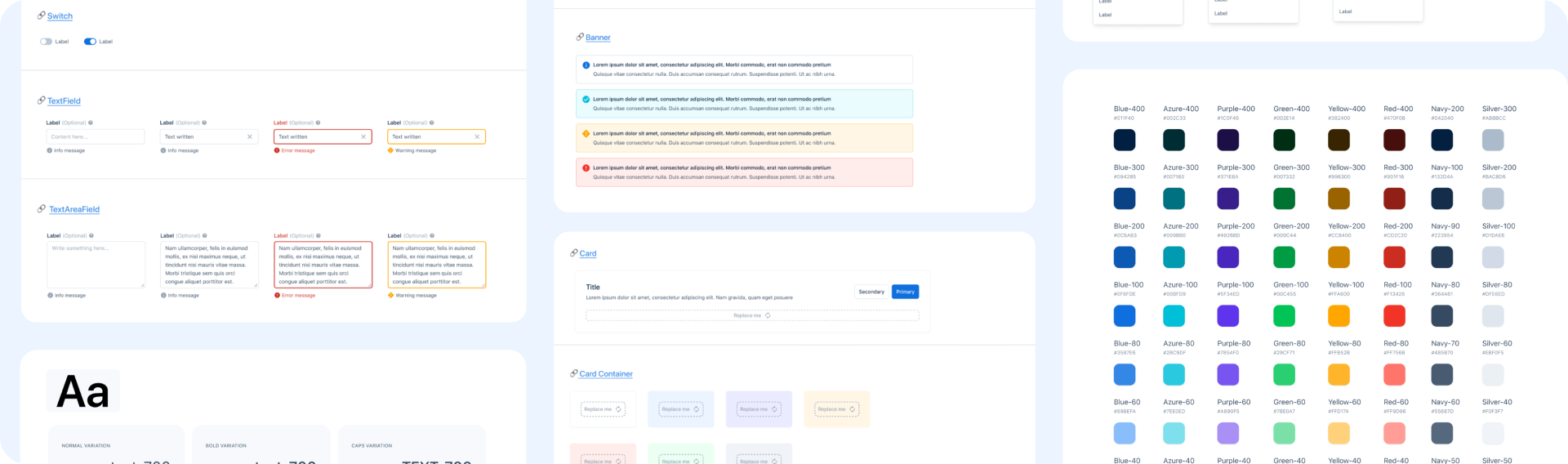
Managing Midnight,
PayFit's design system.
Challenge: Grow adoption of the design system and give designers a way to contribute.
My role: Design system lead and Design Ops: Double Diamond, innersourcing, success metrics.
Scope: One shared library for 20+ designers, with 3 measurable goals and an action plan.
The design system is constantly evolving. My aim on this page is not to delve into the library details, but rather to share the methods and processes implemented to drive team development and contribute to the design system.
“Double Diamond” and product design methodologies within the design system
I proposed to the team to adopt the Double Diamond approach to structure our design phases. Gone are the days of designs based on assumptions; the team has learned to invest more time in research.
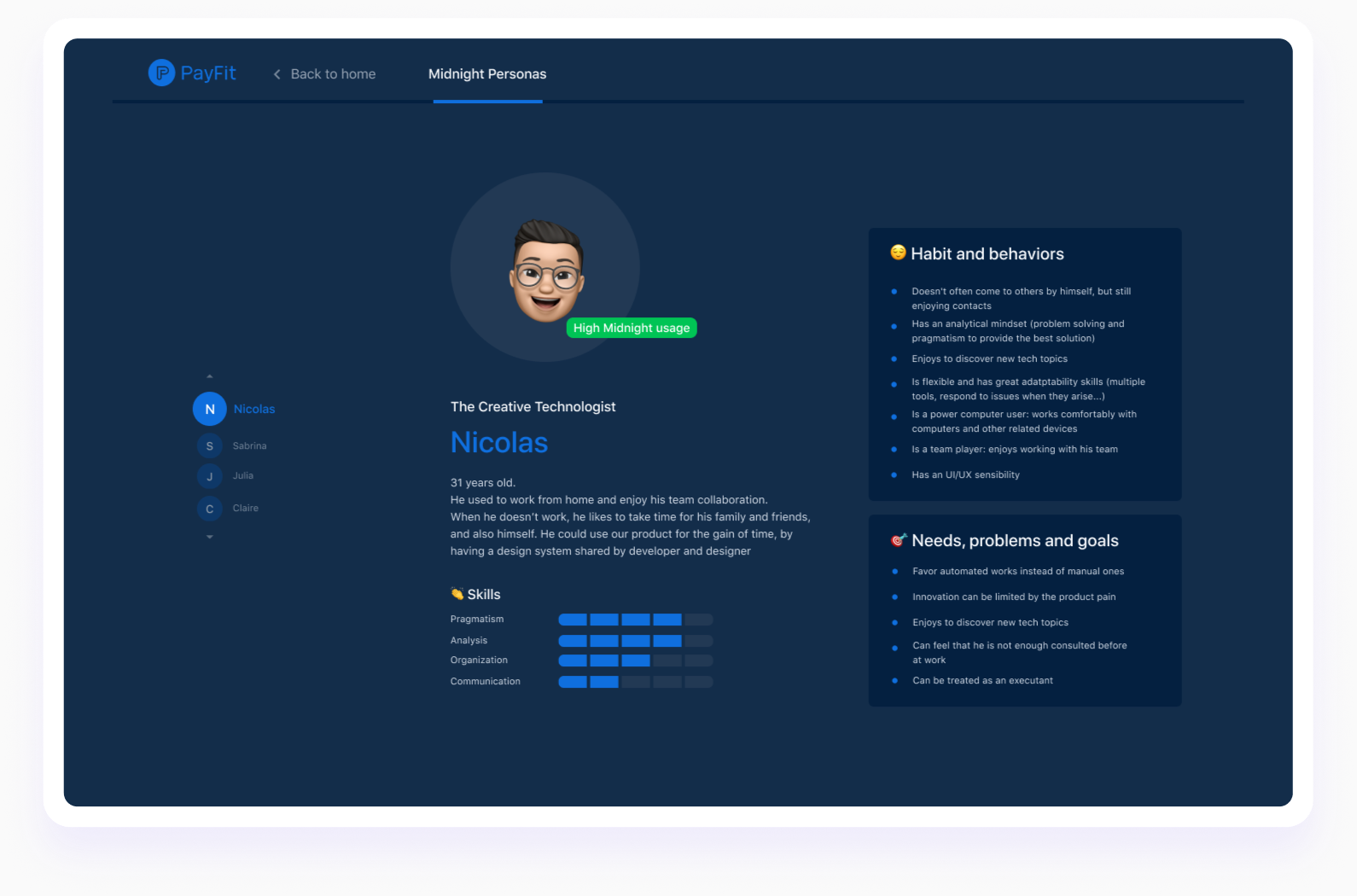
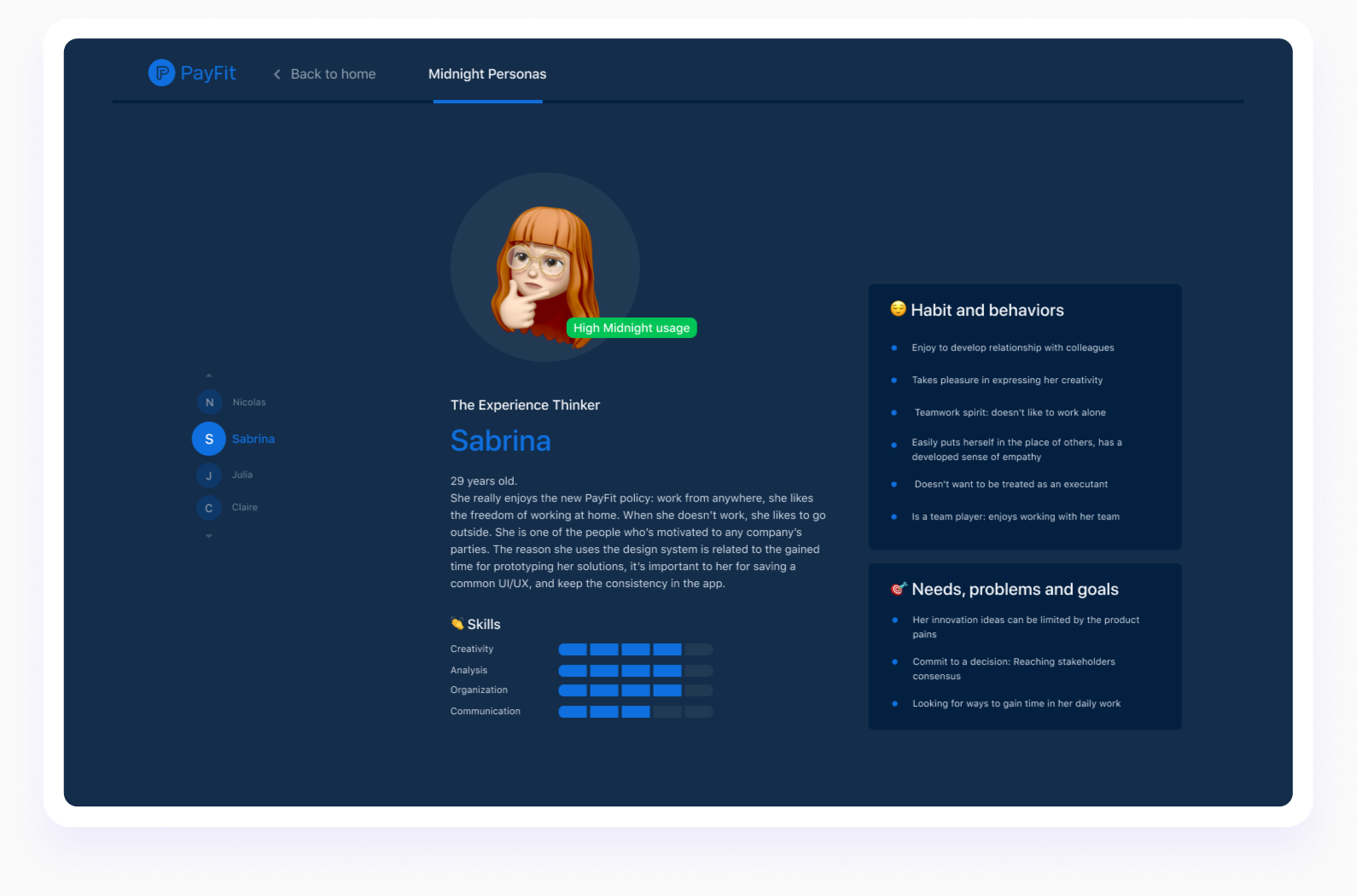
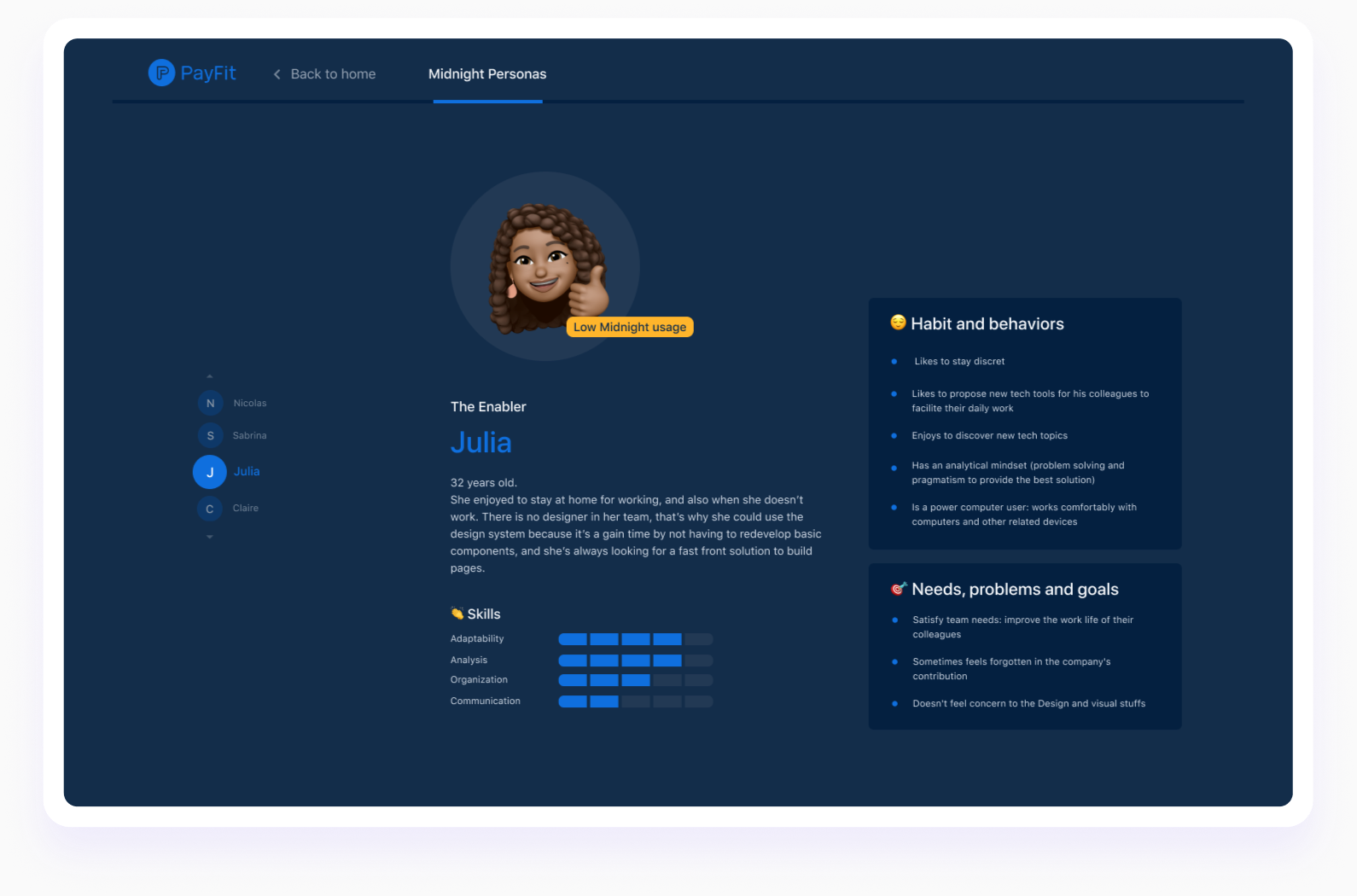
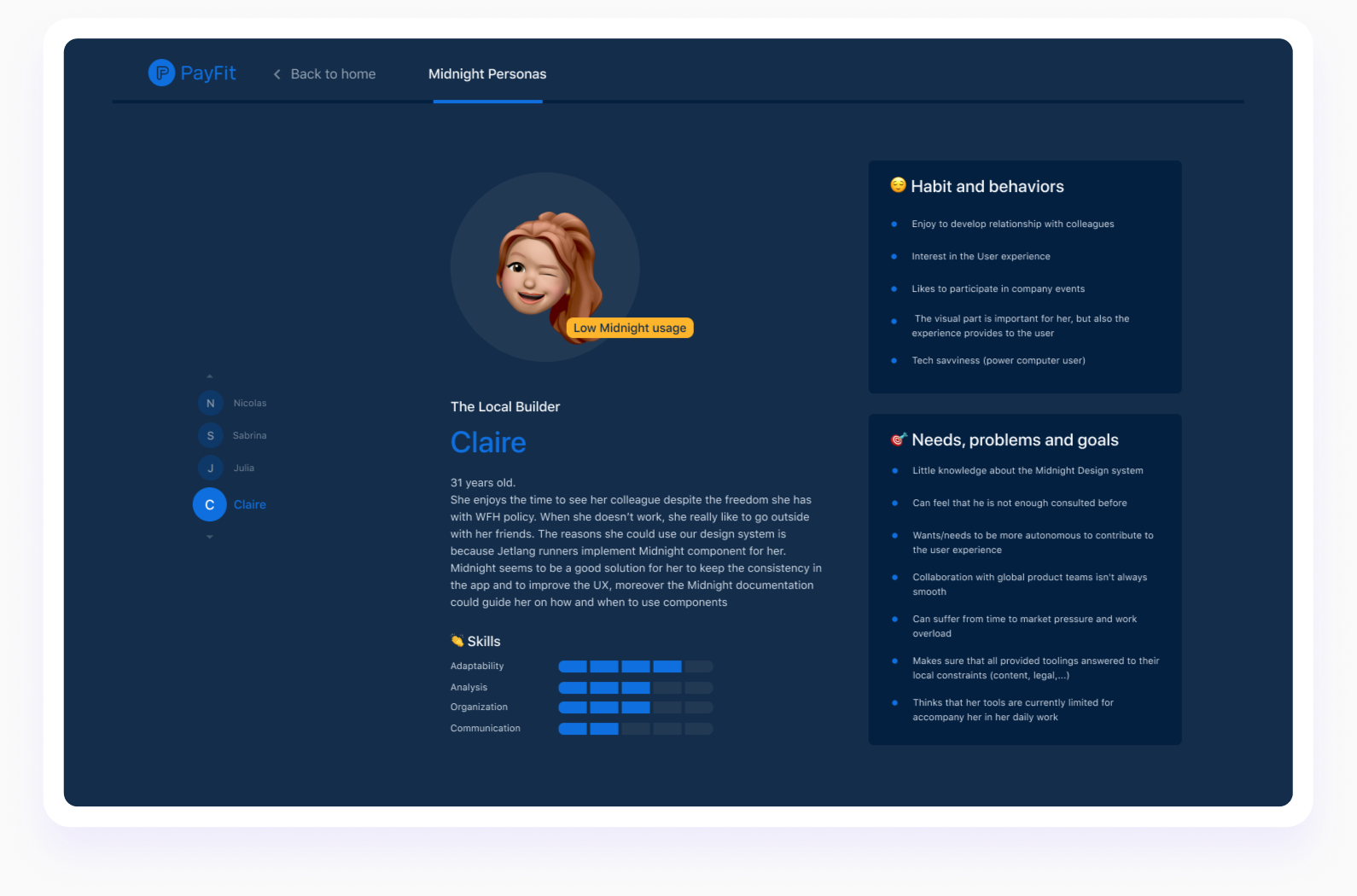
Creating personas also helped detach the team from their own assumptions and allowed us to be guided by the needs of our users.
Innersourcing: the internal contribution access
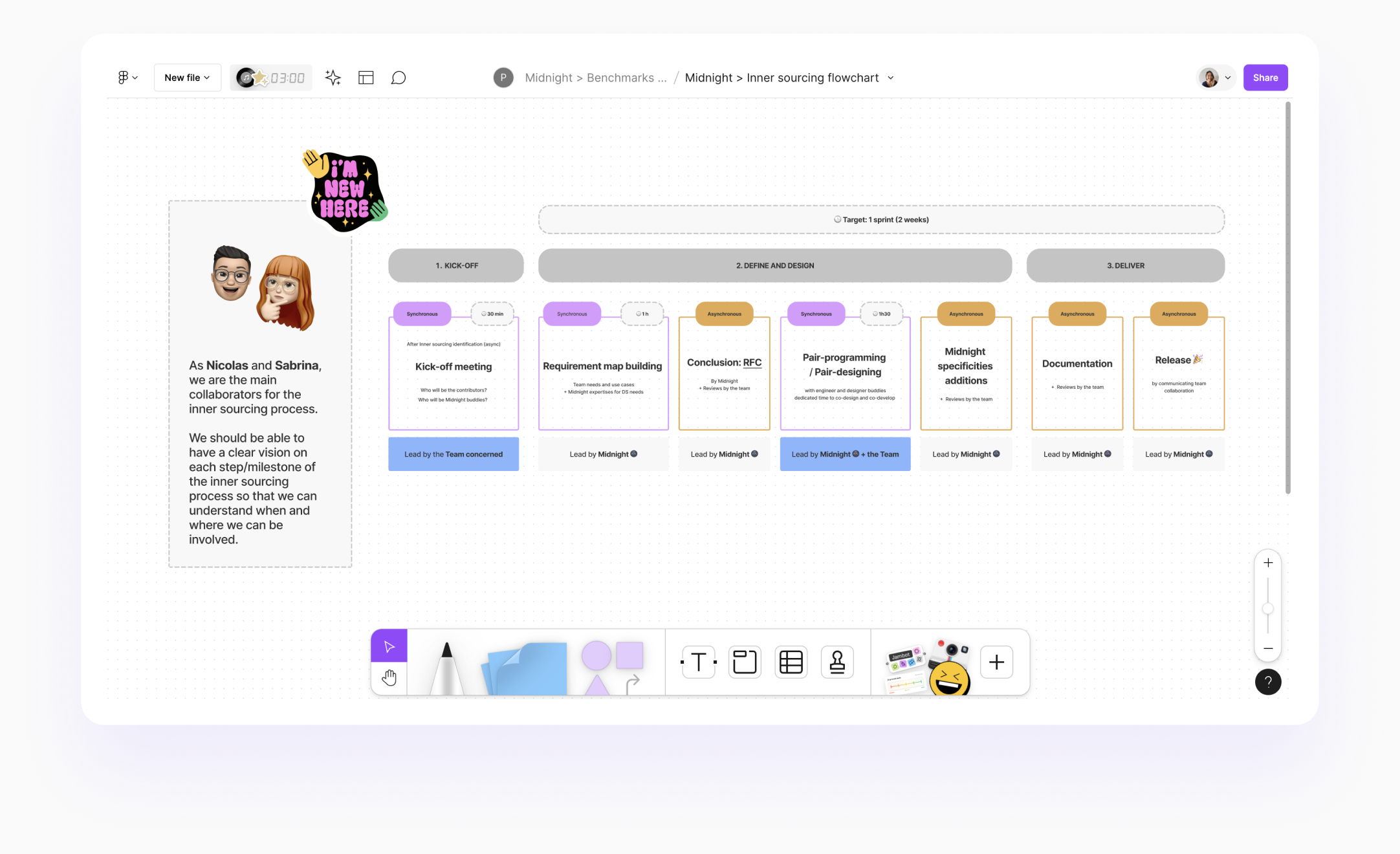
Going beyond the boundaries of our team, we have considered involving our users more in the component creation process.
How do we proceed? Here is the process communicated to the teams to facilitate collaboration and contribution.
Measuring the success and effectiveness of the design system
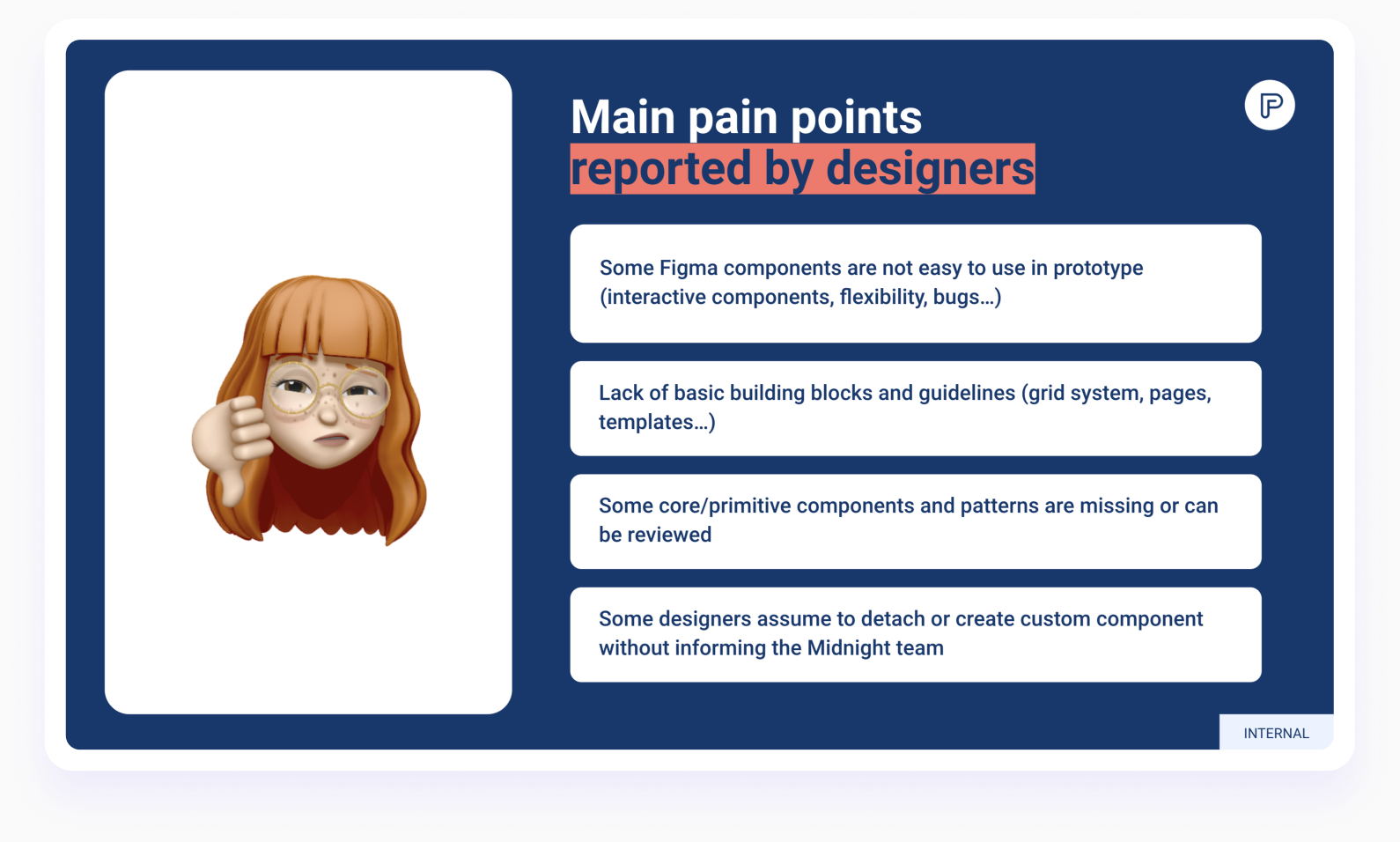
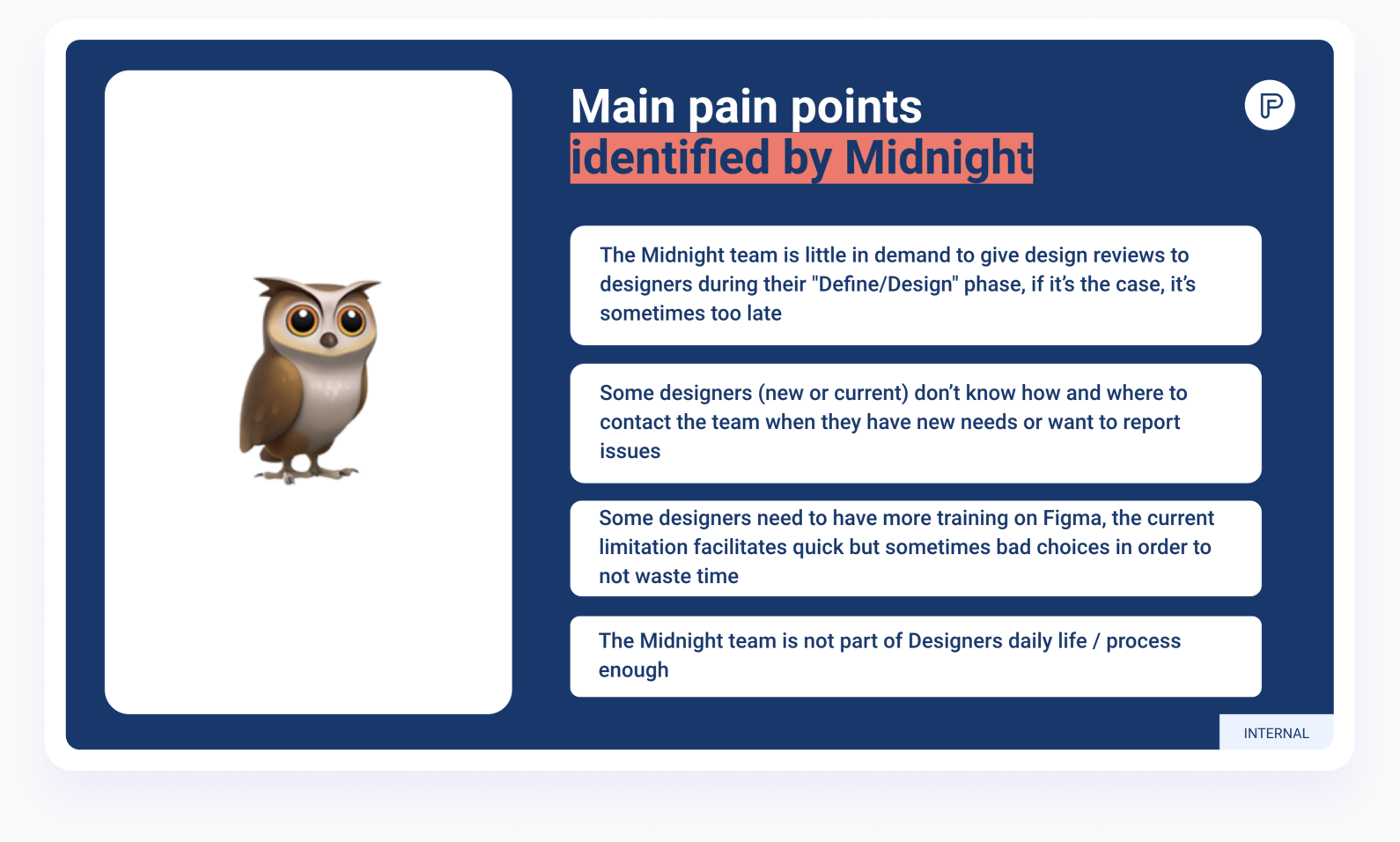
In order to continuously improve, my team and I faced the challenge of measuring the success of our design system, with the initial focus being on the satisfaction of our close users (developers and designers).
GOAL 1
100% of product designers’ projects are linked to Midnight library on Figma (styles and components).
GOAL 2
100% of new design elements are presented and validated by the Midnight team before starting development.
GOAL 3
Raise the designers’ contributions and participation: requests, issues reported, innersourcing...
Action plan:
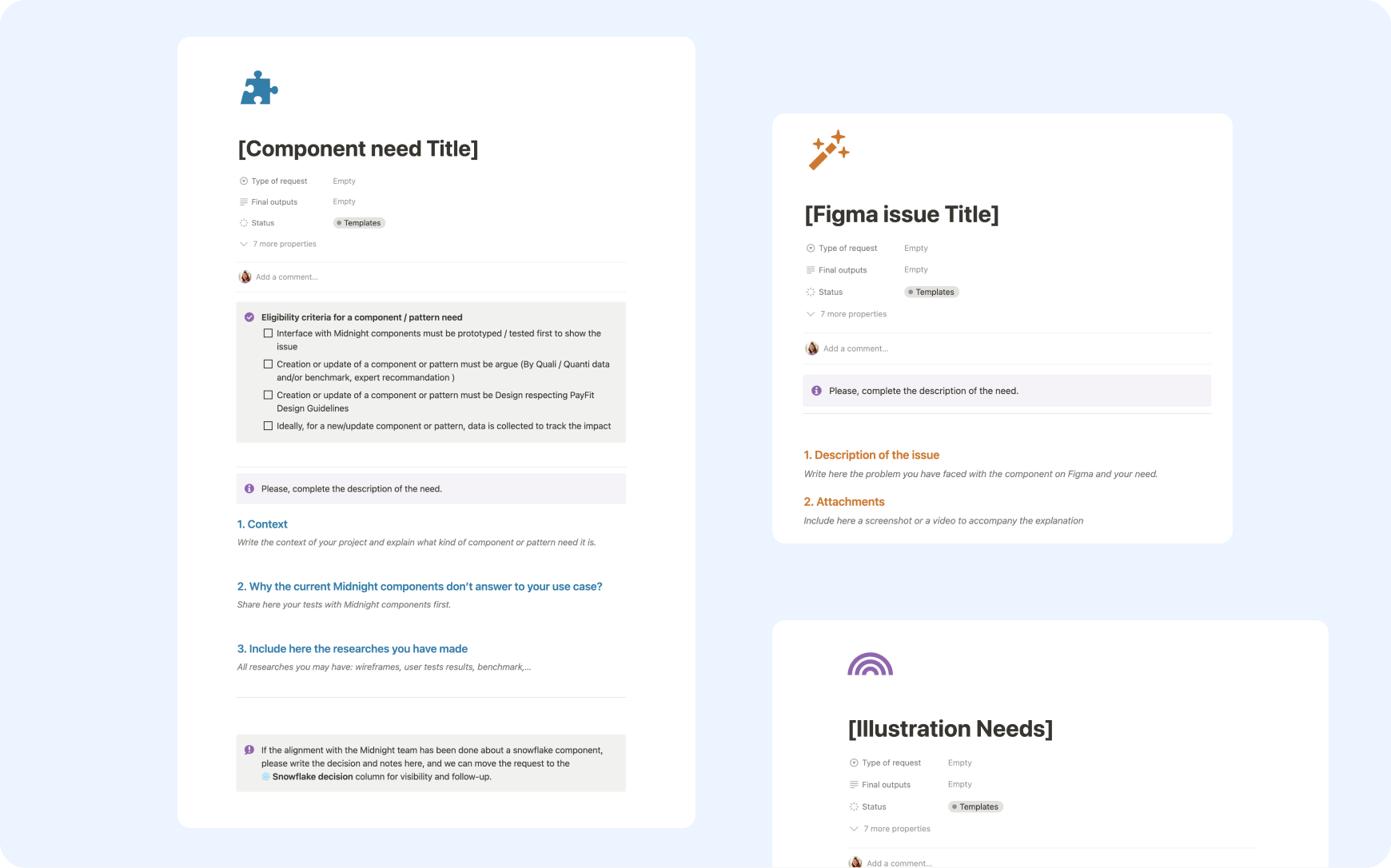
Once pain points were identified, my final mission within this team was to implement an action plan proposing new tools and rituals aimed at increasing the adoption of the design system in our users' daily workflow.
Example: DS backlog to collect all needs, to give visibility and prioritize the actions.
Key Takeaways
- Design system expertise: Building components and patterns for designers and developers.
- Cross-functional collaboration: Worked daily with developers and closely with designers.
- Documentation & handover: Consolidated design decisions and documented guidelines to ensure a smooth handover across teams.